



Figuring out whether a townhouse or a condo is cheaper isn’t just about looking at listing prices. The type of property you choose will affect your monthly costs, your control over your space, and even your daily life.
Sometimes, a condo’s lower price hides higher monthly fees. Other times, a townhouse costs more upfront but saves you money in the long run. The only way to see what’s best for you is to understand how each type works, what you’re actually paying for, and how that fits into your budget and lifestyle.
What Is a Townhouse and What Is a Condo?
Both townhouses and condos have shared walls and close neighbors, but their ownership structures and responsibilities are quite different.
Townhouse
A multi-story home that shares one or two walls with neighbors but stands on its own piece of land.
In most cases, you own the entire structure inside and out, along with the land underneath, known as “fee simple” ownership.
You get more freedom, but you also have more maintenance to manage.
Condo
Often resembles an apartment building, though some look like townhouses.
You own the inside of your unit, while the building’s exterior, land, and shared spaces (lobby, gym, pool, etc.) are owned and maintained by the homeowners association (HOA).
You have lower personal maintenance, but there are more rules and less control.
CF’s Tip: Some developments label homes as “townhouses” but legally treat them like condos. Always check your title documents to know exactly what you own.
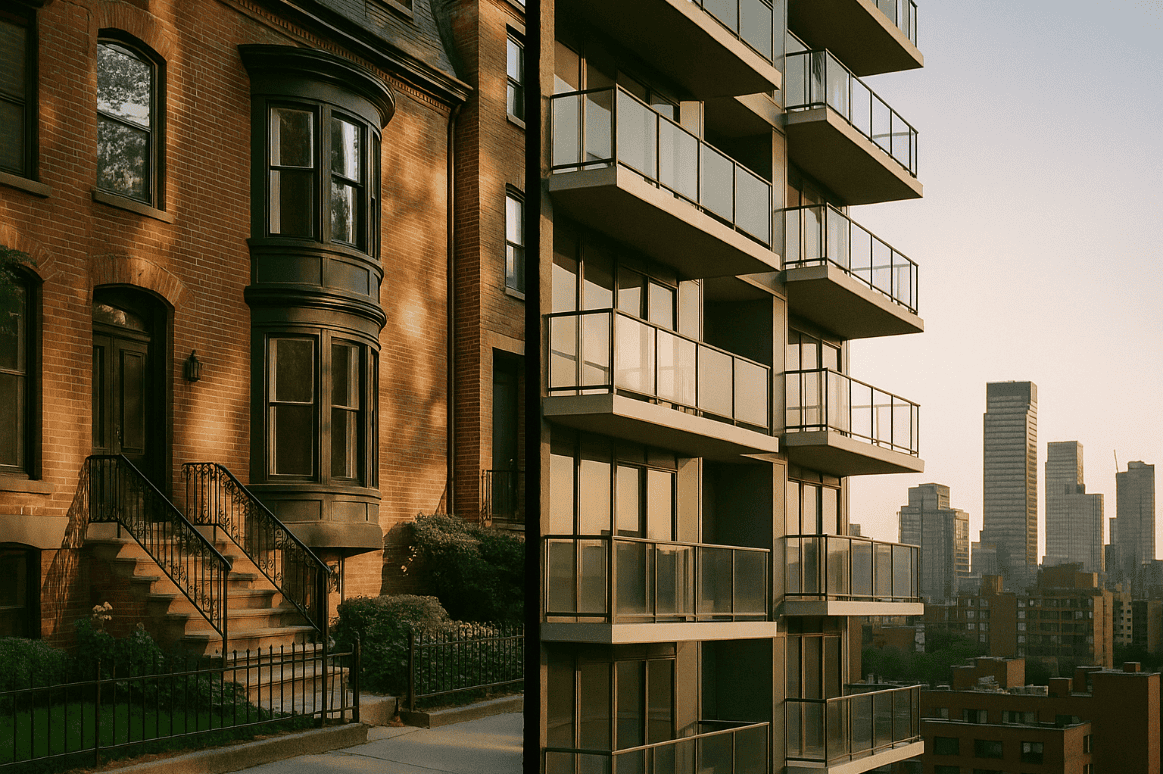
Ownership & Structure: Who Handles What
In a condo, you own everything inside your walls. Roof repairs, exterior painting, landscaping — those are the HOA’s responsibilities, and you pay for them through monthly fees.
In a townhouse, you own everything — indoors, outdoors, and the land it sits on. An HOA may still exist if the community shares certain areas, but it usually costs less because it doesn’t maintain your individual home.
Key takeaway: Townhouses offer more freedom but require more personal involvement and budgeting for maintenance. Condos are more hands-off but generally have higher fees for shared upkeep.
HOA Involvement and Responsibilities
Condos:
HOAs maintain exteriors, roofs, landscaping, and shared amenities.
Fees are higher because you’re paying for more services.
The California Department of Real Estate states that fees can vary widely — review HOA governing documents and check for potential special assessments before making a purchase.
Townhouses:
HOAs only manage shared spaces like parks, driveways, or some landscaping.
Owners take care of all maintenance for their units — both exterior and interior.
Fees are lower, but owners have more personal responsibility.
Amenities and Community Living
Condos often provide a range of perks — pools, gyms, and lounges — and the cost is shared among residents. This setup can create a more communal feel but also raises HOA fees.
Townhouses typically offer fewer shared amenities but provide more private outdoor space, like a backyard or patio. The sense of community depends more on the neighbors rather than organized shared facilities.
Bottom line for costs: Even if a condo’s purchase price is lower, the amenities and their upkeep can make your monthly payment higher than that of a similar townhouse.

Cost Comparison: Condo vs. Townhouse in 2025
When people ask which is cheaper, they usually just look at sale prices. That’s a mistake. The real answer includes purchase price, HOA fees, property taxes, insurance, maintenance, and even financing differences.
Home Purchase Price
In general, condos list for less than townhouses. As of the latest market data:
Condo median price: around $355,491
Townhouse median price: around $380,602
That price gap makes condos attractive for first-time buyers. They require a smaller down payment and a smaller loan. But keep in mind, a townhouse’s higher purchase price often comes with lower ongoing fees, which can balance out over time.
HOA Fees and What They Cover
Condo HOA fees are higher, usually $300 to $400 per month in most markets. However, in some areas, especially in buildings with many amenities, fees can rise to $3,500 per month for larger units. These fees typically cover:
- Exterior and roof maintenance
- Amenities like pools, gyms, and clubhouses
- Landscaping
- Some utilities like water and trash
Townhouse HOA fees average $200 to $300 per month, sometimes less. These usually cover:
- Shared spaces like parks and driveways
- Limited landscaping
- No exterior maintenance for your individual unit
CF’s Tip: Always break down exactly what’s included before comparing HOA fees. You might save $200 a month on fees but spend $400 on roof repairs each year.

Homeowners Insurance
Insurance is cheaper for condos because you only cover the interior. The HOA covers the exterior and structure. Condo insurance (HO-6 policy) averages about $500 per year.
Townhouse owners need full-structure coverage for both the interior and exterior, making premiums higher. However, you also have more control over coverage limits and deductibles.
Property Taxes
Property taxes depend on the assessed value and land ownership.
Townhouses: You’re taxed on both the home and the land, which can lead to higher annual taxes.
Condos: You’re only taxed on your individual unit. The land and common areas are collectively owned, usually leading to a lower tax bill.
The National Association of Realtors notes that this difference is a key reason condos often have lower annual taxes, even in the same neighborhood.
Mortgage Interest Rates
This is where it becomes complicated.
Condos often come with slightly higher interest rates because lenders see them as riskier. Why? Factors like the financial health of the HOA, the number of investor-owned units, and ongoing lawsuits can all impact loan approval.
Fannie Mae may impose an additional 0.75% fee if you don’t put at least 25% down on certain condos.
Non-warrantable condos (those with high investor ownership, litigation, or poor reserves) might not qualify for FHA, VA, or conventional financing at all. You would need a jumbo or portfolio lender, often with stricter terms.
Townhouses are generally treated like single-family homes for financing. That means:
- Easier access to FHA, VA, and conventional loans
- Better interest rates
- Fewer restrictions during underwriting
Real-World Example
One of our clients in Los Angeles fell in love with a $550,000 downtown condo. It seemed like a good deal until the $850 per month HOA fees made the total monthly cost higher than a slightly more expensive townhouse. After calculating the numbers, the townhouse with lower fees and a better financing rate emerged as the smarter long-term choice.
The Real Trade-Offs: Townhouse vs. Condo in 2025
This decision really depends on your daily life, financial plan, and willingness to take on responsibilities. Both condos and townhouses can be good purchases, but they offer very different experiences of ownership.
Townhouse: More Space, More Control, and More Work
A townhouse is a mix between a condo and a single-family home. You enjoy vertical space and a front door that opens directly to the street; this means no shared hallways or elevator rides with strangers.
Advantages of Townhouse Living:
1. Space to breathe. Most townhouses are multi-level and provide more square footage than condos. This gives you extra room for bedrooms, a home office, or storage that doesn’t require renting elsewhere.
2. You own the land. This is known as “fee simple” ownership. It can increase long-term value because buyers usually pay more for land ownership. It also means you have more control over exterior improvements and landscaping.
3. Lower HOA fees. Since the HOA generally only maintains shared areas like private roads or playgrounds, the monthly fees tend to be lower than those for most condos.
4. More privacy. You’re less likely to share walls with many neighbors, and there are no common hallways or lobbies with constant foot traffic.
Drawbacks of Townhouse Ownership:
1. Maintenance is on you. Roof repairs? That’s your cost. Painting the siding? Your weekend task. Snow removal, landscaping, and pest control are all your responsibility.
2. Higher property taxes. Owning both the structure and the land means a higher assessed value, which can result in a larger annual tax bill.
3. Resale tied to the housing market. Townhouse values can fluctuate more directly with single-family home prices in your area. This can be an advantage in a hot market but a risk in a downturn.
Condo: Low Maintenance, High Convenience, but Tighter Rules.
If you prefer spending your Saturday at brunch over cleaning gutters, a condo might be the better option. Condos are built for convenience, with the HOA managing much of the upkeep and amenities.
Advantages of Condo Living:
1. Lower entry price. Condos usually cost less upfront, leading to a smaller down payment and potentially a quicker path to ownership.
2. Amenities included. Features like pools, gyms, clubhouses, roof decks, and landscaped gardens are common in condo communities, and you don’t have to arrange repairs yourself.
3. Minimal maintenance. You look after the inside of your unit, while the HOA handles the exterior, roof, and common spaces.
4. Location perks. Condos are often located in walkable neighborhoods near restaurants, entertainment, and public transit, making them appealing for city living.
Drawbacks of Condo Ownership:
1. Higher HOA dues. Those amenities and services come at a cost. HOA fees can vary from reasonable to high, particularly in buildings with pools, gyms, or concierge services.
2. Strict HOA rules. Want to rent out your unit, change your windows, or get a dog? You may need permission, and the answer could be “no.”
3. Less privacy. You’ll likely share walls, ceilings, or floors with neighbors, and common areas mean more interaction whether you like it or not.
4. Slower appreciation. Condos don’t always increase in value as quickly as townhouses or single-family homes, especially in markets where buyers favor land ownership.
Which Lifestyle Fits You?
The best choice often depends on how you want to live:
Condos are ideal for those who value location, amenities, and a low-maintenance lifestyle. They should also be comfortable with giving up some control and facing potentially higher monthly fees.
Townhouses appeal to buyers who want more space, a private outdoor area, and fewer shared walls, but are ready to take on more responsibility for maintenance.
Maintenance: Who Does What?
Condos: Your HOA manages significant exterior issues—roof, exterior paint, siding, landscaping, and snow removal. You only focus on what’s inside your unit.
Townhouses: You handle everything, both inside and out. This can mean higher ongoing costs, but you also have control over timelines, contractors, and workmanship.

Financing Differences You Need to Know
Lenders view condos and townhouses differently, which can influence your interest rate, down payment, and even your ability to get a loan.
Condos:
Your lender will assess not just your finances, but also the overall financial health of the entire building.
If many units are owned by investors, the HOA has low reserves, or if there is legal action, your condo may be seen as non-warrantable. This could limit loan options and lead to higher rates.
Government-backed loans, such as FHA or VA loans, often require the entire building to be approved, not just your unit.
Townhouses:
They are usually treated like single-family homes when it comes to financing, which simplifies the approval process.
Fewer restrictions provide more loan options, including FHA, VA, and conventional loans, without the extra scrutiny of a condo association’s finances.
Smart Buyer Moves: How to Compare Townhouses vs. Condos in Your Market
Once you’ve considered the lifestyle and maintenance differences, the next step is to get practical. Look at the numbers, the details, and the local market. Whether you’re leaning toward a condo or a townhouse, these strategies will help you make a confident choice.
1. Start with Price Per Square Foot, Not Just the Listing Price
It’s easy to compare homes based only on their listed prices, but that can be misleading. A $700K condo with 1,100 square feet might actually cost more per square foot than a $750K townhouse with 1,400 square feet.
Why this matters: Price per square foot shows whether you’re paying more for location, size, or amenities. It’s one of the best ways to compare properties across different neighborhoods.
In high-density areas, space is valuable. If a property is much smaller yet in the same price range as larger options, you’re paying a premium for its location or building features.
2. Understand What’s Included, and What’s Not
HOA fees can hide the real monthly cost of ownership.
Condos: HOA dues usually cover exterior maintenance, shared amenities (like pools or gyms), and sometimes utilities such as water or trash. However, a building with high fees and amenities you never use can make a “cheap” condo more expensive than a townhouse.
Townhouses: They have lower HOA dues, but you pay for all exterior maintenance and repairs yourself. If the roof needs replacing in three years, that’s your expense.
Tip: Before you get too attached to a listing, break down the HOA fee line-by-line and see what those services would cost if you paid for them separately.
3. Location Audit: Look Beyond Your Commute
A nice property in the wrong area can be a costly mistake. Check:
- Distance to grocery stores, hospitals, schools, and public transit.
- Hazard zones such as floodplains or wildfire-prone areas.
- Local noise levels; condos in busy areas might mean more nightlife outside your window.
4. Read the HOA Rules Like They’re a Contract, Because They Are
The Homeowners Association has more control over your daily life than many buyers realize.
Common restrictions include limitations on short-term rentals, pet rules, renovation approvals, or even bans on specific paint colors.
Financial health is important: Review the HOA’s reserve study, meeting minutes, and budget. A poorly managed HOA can lead to special assessments, which are surprise fees for major repairs like roof replacements or elevator upgrades.
In California, HOAs follow the Davis-Stirling Act, which sets rules on governance, finances, and disputes. If you’re buying here, understand that those documents are crucial for knowing what life in the community will be like.
5. Financing Realities: Condo vs. Townhouse
Condos:
- May need the project to be “warrantable” to qualify for conventional loans.
- FHA and VA loans are only available in buildings approved by those programs.
- Lenders look at the building’s occupancy ratio, reserve funds, and legal status before approving a loan, not just your finances.
Townhouses:
- Typically financed like single-family homes with fewer restrictions.
- You won’t face a “project approval” process, which makes offers on townhouses more competitive where condo financing may fall through.
6. Property Disclosures Are Your Early Warning System
In California, sellers must provide detailed disclosures about property condition, neighborhood issues, and HOA legal matters. Request the Transfer Disclosure Statement (TDS) and any inspection reports early.
Look for red flags like pending lawsuits, structural repairs, or water damage history.
Remember: you’re not just buying a home, you’re also buying into the HOA’s reputation, reserve fund, and ability to handle repairs.
The Final Verdict: Which Is Cheaper in the Long Run?
Here’s the truth: neither option is always cheaper. The better deal depends on your market, the specific property, and your lifestyle priorities.
Condos can have lower upfront costs and spare you from maintenance work, but higher HOA dues and stricter rules may make them more expensive over time.
Townhouses might cost more to buy and need more upkeep, but lower HOA fees and land ownership can lead to better appreciation and more control over the property.
If you prefer low-maintenance living and location, condos might be the best fit. If you value space and control and are willing to handle maintenance, townhouses might be the smarter long-term choice.
Tip: Don’t Choose Based on Stereotypes, Choose Based on Math
At Carlyle Financial, we create side-by-side financial models that show your total monthly cost, long-term appreciation potential, and estimated resale values for both condos and townhouses in your area. This way, you make your decision based on real numbers, not just assumptions.
If you want to find out whether a townhouse or condo makes more financial sense for you, call us at 310-276-7400 or contact us through this form. We’ll help you compare, calculate, and choose the option that fits your life and future goals.